

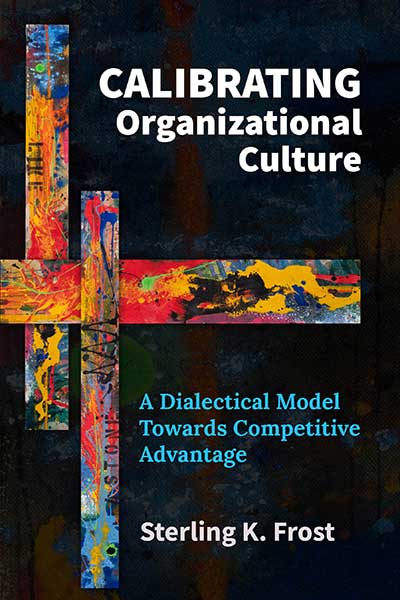
Calibrating Organizational Culture: A Dialectical Model Towards Competitive Advantage
$90.00
Using original data and structured interviews with senior executives from the Caribbean banking sector, the author provides an in-depth case study approach that is accessible to a wide range of readers
By: Sterling K. Frost
Description
Contemporary challenges of labour and the digital economy have forced a further reckoning between science and art in order to ensure the staying power and success of firms and institutions as the twenty-first century progresses. This requires leveraging strategic performance management systems, culture research, and expert intuition, to create a conceptual model for calibrating an organizational culture that will optimize organizational performance.
Using original data and structured interviews with senior executives from the Caribbean banking sector, the author provides an in-depth case study approach that is accessible to a wide range of readers. State-of-the-art concepts and theories pertaining to organizational culture, systems thinking, and knowledge management are examined and deconstructed alongside and integrated with case study findings on relationships among organisational culture, knowledge sharing, and organizational performance. The outcomes of this analysis establish that these variables and others can be amenable to quantitative measurement and realignment, in order to realize strategic goals.
While providing fundamental empirical insights into how knowledge sharing and culture affect different aspects of performance, this book also demonstrates how organizational tensions can be leveraged for benefits to a firm. In doing so, it extends the field of organizational development to fit the hefty demands of doing business in the Fifth Industrial Revolution.
Additional information
| Weight | 2 lbs |
|---|---|
| Dimensions | 9 × 6 in |
| ISBN | 978-976-8286-64-2 |
| Binding | Paperback |
| Page Count | 260 pages |
| Publication Date | October 2022 |
Contents
List of Figures
List of Tables
Foreword
Introduction: The Strategic Management Context
- The Search for Levers and Research Conceptualization
Competitive Advantage in Banking
Systems Thinking and Organizational Entropy
Knowledge as a Key Economic Resource
Research Conceptualization
Organizational Culture, Knowledge Sharing, and
Organizational Performance
- Theoretical Constructs
The Constructs – Organizational Culture, Knowledge Sharing,
and Organizational Performance
Relationships amongst the Constructs
Hypotheses and Propositions for Calibrating Organizational
Culture and Organizational Performance
- A Practical Model of the Constructs and Appropriate
Methodology in the Banking Environment
Methodology – Mixed Approach: Quantitative and Qualitative
Instruments Used and Sample Sizes
Data Analysis
Methodological Rigour
Summary and Conclusion
- Empirical Findings
Introduction
Characteristics of the Samples
Competing Values Framework Culture Type
SECI Questionnaire
Final Extraction
Relationships and Path Analysis
Interview Findings
- Critical Systemic Drivers of Organizational Performance
of the Case Study RNB
Relationships and Effects
Research Hypotheses, Proposition, and Limitations: Support or
Refute
Triangulation and Embedding of Interviews
Limitations
- Application of the Findings: A Science and An Art
Initial Proposition Supported by Findings
Implications for Organizational Strategy
A Meta-Model for Calibrating Culture
A Blueprint for Competitive Advantage
Appendix 1 – Interview Questions
Appendix 2 – Path Diagrams and AMOS Output
References
Index


