

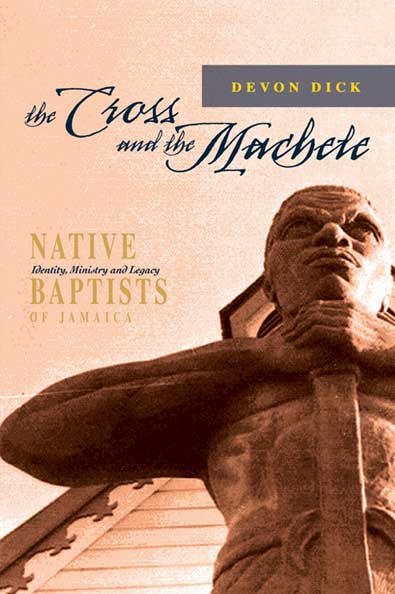

The 1865 Morant Bay Uprising, otherwise known as the ‘Native Baptist War’ represents an important watershed in Jamaican history. Traditional historiography has often represented the actions of Paul Bogle hero/villan Baptist Deacon and his followers when they marched on the Morant Bay courthouse in 1865 as being motivated by mere murderous intent.
Thoroughly researched and drawing on original documents attributed to Bogle and other Native Baptists, The Cross and the Machete provides an alternative interpretation of Bogle’s actions and introduces a new paradigm for understanding the struggle for equality, justice and liberation.
Contents:
List of Maps
List of Figures
List of Tables
Foreword
Preface
Acknowledgements
Abbreviations
- Introduction
- Identity of the Native Baptists
- Religious Influences on the Native Baptists
- Native Baptists’ Beliefs and Practices
- Interpretation: Themes and Hermeneutic of the Native Baptists
- Nature and Scope of the1865 Native Baptist War
- Conclusion
Notes
Bibliography
Index
About the Author:
Devon Dick is Pastor of the Boulevard Baptist Church, St Andrew, Jamaica and the author of Rebellion to Riot: The Jamaican Church in Nation Building (2002).