


The Weight of Our Arsenal: Francois Villon’s Unruly Poems in Paris
folder_openForthcoming
How is it that a poet who was probably hanged in 1463 has sparked popular culture from sixteenth-century revivals to twentieth-century adaptations and translations? One answer, according to Stephen Nichols, is Villon’s street-side view of life in fifteenth-century Paris, in which he speaks and writes the language of the people. Readers unfamiliar with Villon’s work will get both an introduction and a taste of the poet’s life on the knife-edge between law and outlaw.
(An HAB book)
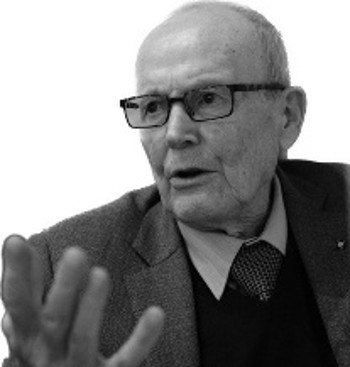 Stephen G. Nichols, James M. Beall Professor Emeritus of French and Academy Professor at Johns Hopkins University, is a Fellow of the American Academy of Arts and Sciences, a Fellow of the Medieval Academy of America, and an Honorary Senior Fellow of the School of Criticism and Theory (which he directed from 1995-2001). A Comparative Literature PhD from Yale University, Nichols holds an honorary Docteur ès Lettres from the University of Geneva and was named an Officer of the Order of Arts and Letters by the French government. He has written/edited some 28 books on the Middle Ages, including Romanesque Signs: Early Medieval Narrative and Iconography, which received the Modern Language Association’s Lowell Prize for an outstanding book. Most recently, he published Myths of the Golden Age in European Culture (2025). Nichols co-directs the Johns Hopkins’ Digital Library of Medieval Manuscripts (https://dlmm.library.jhu.edu/en/digital-library-of-medieval-manuscripts/) and co-founded the journal Digital Philology, published by the Johns Hopkins University Press.

